Touchdowns Optional: Why Super Bowl Sunday Is the Biggest Day on the American Calendar
Touchdowns Optional: Why Super Bowl Sunday Is the Biggest Day on the American Calendar
Here's a test. Name another day of the year when your most sports-averse friend — the one who couldn't name a quarterback if their life depended on it — willingly sits down in front of a football game for four hours. Name another day when the commercials are as anticipated as the main event. Name another day when a halftime show generates more post-event conversation than the actual competition it interrupts.
You can't. Because there isn't one. Super Bowl Sunday is in a category entirely by itself, and it's been that way for decades.
The Numbers Don't Lie — This Is the Biggest Shared Moment in American Life
Let's start with the raw scale of it. Super Bowl LVIII in 2024 drew an average of 123.4 million viewers, making it the most-watched television broadcast in American history at the time. To put that in context, the Oscars — another massive cultural event — typically draws somewhere around 18 to 20 million viewers. The Super Bowl doesn't just beat that number. It obliterates it.
And viewership is only part of the story. The National Retail Federation has estimated that Americans spend upward of $16 billion in Super Bowl-related purchases in a typical year — on food, decorations, team merchandise, and televisions bought specifically for the occasion. The average American household watching the game spends around $85 preparing for it. That's not sports fandom. That's a national ritual with a budget.
The Food Situation Is Completely Out of Control (In the Best Way)
If Super Bowl Sunday were a food holiday, it would be the second-biggest eating day of the year behind only Thanksgiving. An estimated 1.4 billion chicken wings are consumed on Super Bowl Sunday in the United States. One point four billion. The avocado industry essentially builds its entire February around the guacamole demand generated by game day. Pizza delivery companies report Super Bowl Sunday as their single busiest day of the year, every year, without exception.
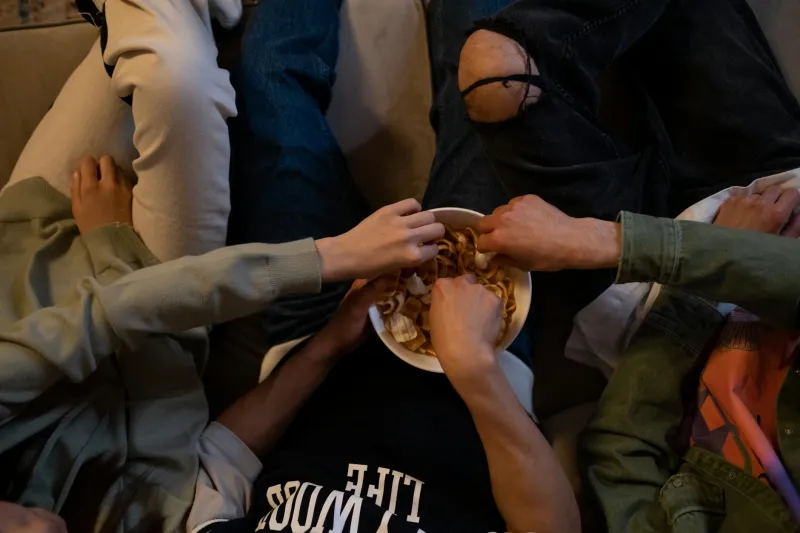
Nobody is eating this much because they're deeply invested in the two-minute drill. They're eating this much because Super Bowl Sunday has become the most socially acceptable reason to gather a group of people in a living room and spend several hours eating things you'd never touch on a Tuesday. The game is the excuse. The party is the point.
The Commercials Have Their Own Fan Base
At some point in the 1980s, something remarkable happened. Advertisers realized that Super Bowl viewership was so enormous, and the audience so captive, that a 30-second spot during the game was worth treating as its own creative event. Brands started pouring millions into production. Viewers started watching specifically to see what the ads would do.
Today, Super Bowl commercials are reviewed, ranked, debated, and replayed on social media with the same energy as the game's biggest plays. Apple's "1984" ad. The Budweiser frogs. The Doritos fan-created spots. These aren't just commercials — they're cultural artifacts that people genuinely remember decades later. When was the last time you remembered a commercial from a regular-season game? Exactly.
The advertising industry has effectively created a parallel event within the Super Bowl, one that non-football fans often admit they're watching for just as much as the sport itself. That's genuinely unprecedented in the history of American broadcasting.
The Halftime Show Has Become Its Own Thing Entirely
For a long time, the Super Bowl halftime show was background noise — marching bands, novelty acts, nothing you'd call essential viewing. Then the production budgets exploded, the bookings got more ambitious, and something shifted. The halftime show became appointment television in its own right.
Shakira and Jennifer Lopez in 2020. Beyoncé in 2013. Prince in 2007 — still widely considered one of the greatest live performances in television history, football or otherwise. Rihanna's 2023 show, which she performed while pregnant, generated more social media engagement than almost any halftime performance before it. These aren't intermissions. They're headline events that happen to occur in the middle of a football game.
Musicians now view a Super Bowl halftime slot as a career milestone on par with a Grammy or a sold-out world tour. That's how far beyond football the day has traveled.
The Unofficial Holiday Nobody Had to Declare
Congress never voted on this. No president signed it into law. There's no federal designation, no guaranteed day off, no official recognition of any kind. And yet Super Bowl Monday has become an informal sick day for a significant portion of the American workforce. Studies have suggested that somewhere between 17 and 20 million Americans call in sick the day after the Super Bowl, making it one of the most reliably unproductive Mondays of the year.
Several states and advocacy groups have periodically pushed to make Super Bowl Monday a federal holiday. It hasn't happened yet — but the fact that the conversation keeps coming back is itself a signal of how deeply embedded the day has become in American life.
Why It Works for Everyone
The genius of Super Bowl Sunday is that it scales. It works for the hardcore football fan who has been tracking divisional standings since September. It works for the casual viewer who just wants to see the big plays. It works for the person who genuinely doesn't care about football but loves a party, a good commercial, and a halftime show. And it works for the host who just wants a reason to make seven-layer dip and fill the living room with people.
No other sporting event — not the World Series, not the NBA Finals, not the Masters — casts that wide a net. The Super Bowl has successfully transcended its sport in a way that nothing else in American athletics has managed, and it's not particularly close.
The touchdowns are great. The final score matters. But if you think the touchdowns and the final score are why 123 million people are watching? You might be missing the bigger picture entirely.