When Sound Disappeared: The Most Spine-Tingling Moments of Silence in Sports History
There's something almost supernatural about the moment when a stadium full of screaming fans suddenly goes completely silent. It's not just quiet—it's the kind of silence that makes your ears ring, where you can hear individual heartbeats and the squeak of sneakers on hardwood from 300 feet away.
These aren't planned moments of silence or respectful tributes. These are the split seconds when reality hits so hard that tens of thousands of people collectively forget how to breathe, creating an atmosphere so thick with tension that it becomes part of sports folklore.
The Silence That Echoed Around the World
April 15, 2013, should have been just another beautiful Monday afternoon at the Boston Marathon. The finish line on Boylston Street was packed with families cheering for runners completing their 26.2-mile journey, the kind of joyful chaos that makes marathon Monday special in Boston.
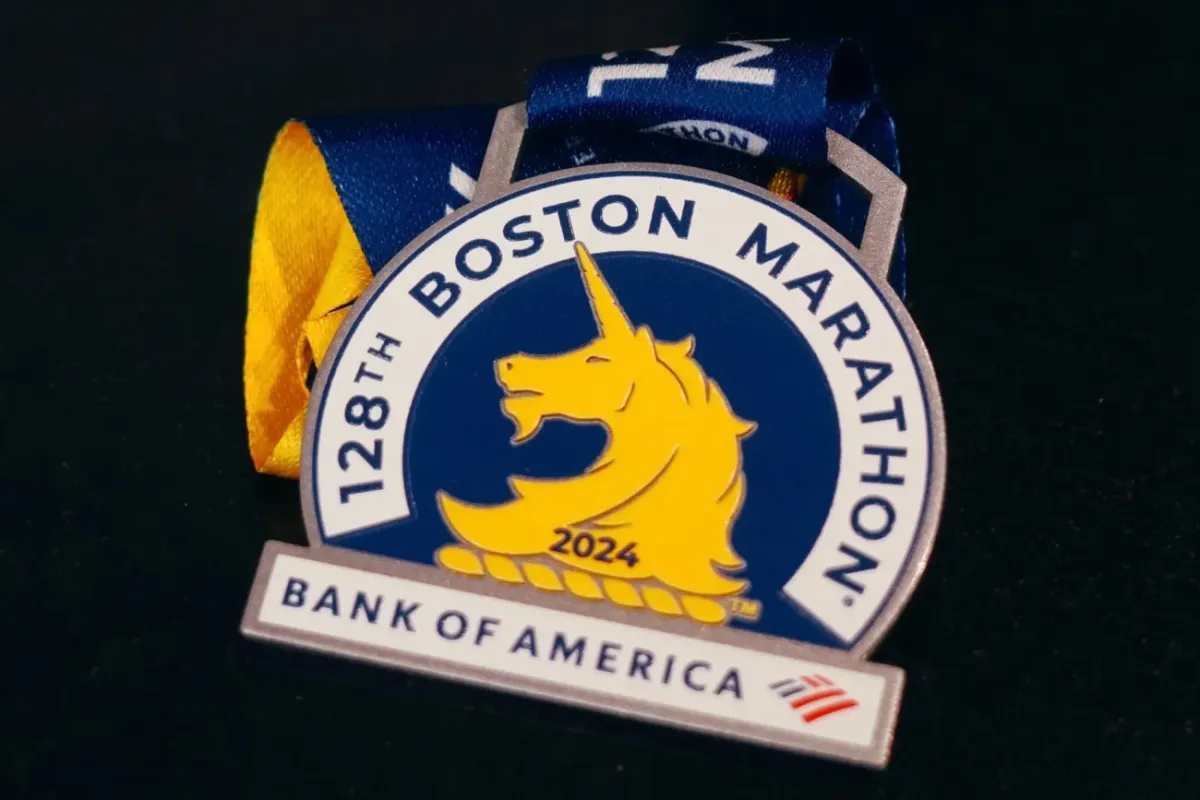 Photo: Boston Marathon, via marathonhandbook.com
Then at 2:49 PM, everything changed in an instant.
The first explosion sent a shockwave through the crowd that was both literal and figurative. For a split second, the thousands of people lining the street went completely silent as their brains tried to process what they'd just witnessed. It wasn't confusion—it was the kind of stunned silence that happens when reality shifts so dramatically that your mind needs a moment to catch up.
That silence lasted maybe three seconds before the screaming started, but those three seconds felt like an eternity. They represented the moment when a celebration turned into a tragedy, when a city's tradition was forever altered by an act of senseless violence.
The runners who were still on the course experienced their own version of this silence—one moment they were surrounded by cheering crowds, the next they were running through empty streets as spectators fled or rushed toward the chaos to help. The contrast was so stark that many runners later described it as the most surreal experience of their lives.
When the Garden Went Silent for Magic
Game 6 of the 1980 NBA Finals at the Philadelphia Spectrum should have been a coronation for the 76ers. They led the series 3-2, had home court advantage, and were facing a Lakers team without their injured superstar Kareem Abdul-Jabbar. The building was electric with anticipation of forcing a Game 7.
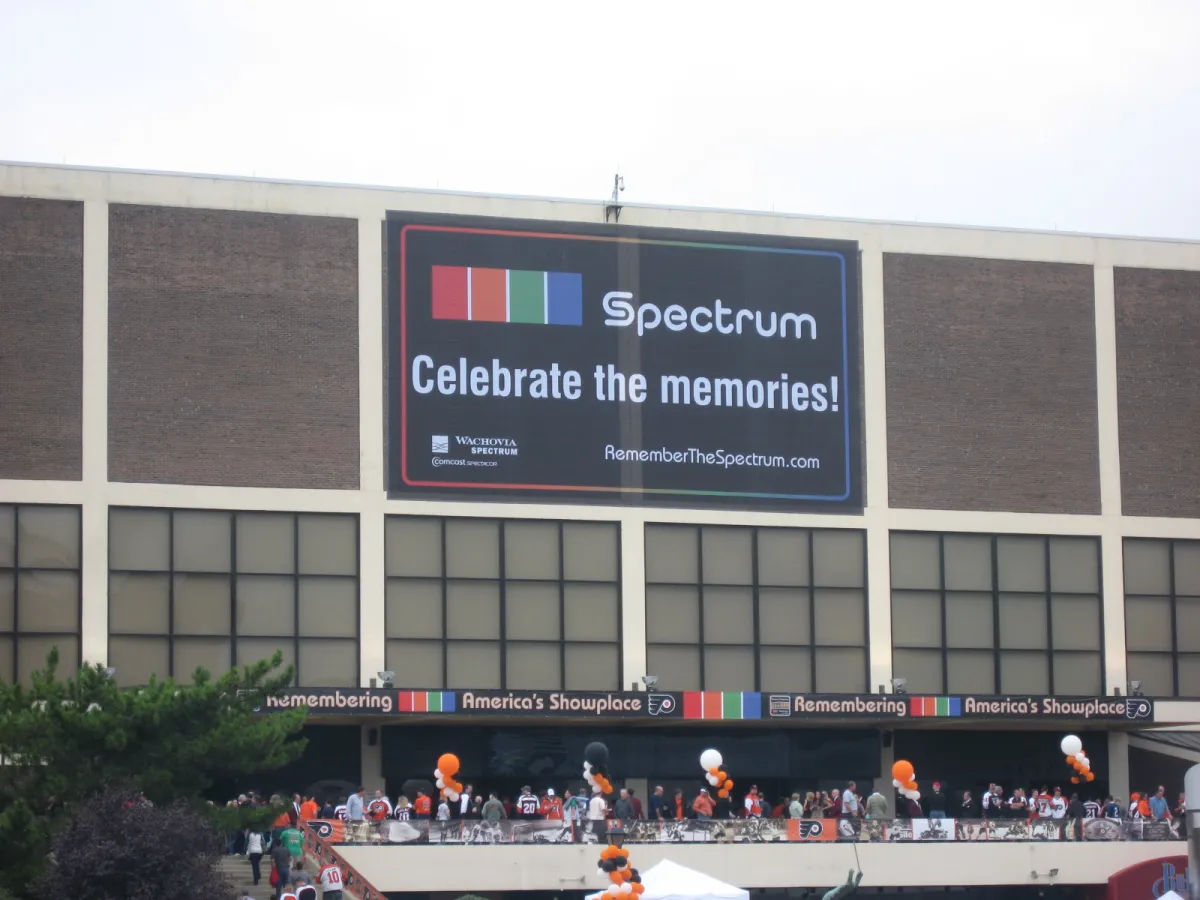 Photo: Philadelphia Spectrum, via 2.bp.blogspot.com
Then a 20-year-old rookie named Magic Johnson started playing center and dropped 42 points, 15 rebounds, and 7 assists in one of the most legendary performances in Finals history.
The silence didn't come all at once—it built gradually as Magic systematically dismantled Philadelphia's championship dreams. With each impossible shot and every dominant play in the post, the Spectrum crowd grew quieter and quieter until the final minutes were played in an almost eerie calm.
By the time Magic hit the clinching shots, 18,000 Sixers fans were sitting in stunned disbelief. They weren't just watching their team lose—they were witnessing the birth of a legend and the end of their championship hopes in the same moment.
The silence was so profound that you could hear Magic's teammates celebrating on the court, their voices echoing through an arena that had been deafening just hours earlier. It was the sound of dreams dying and legends being born simultaneously.
The Upset That Broke the Internet Before the Internet Existed
February 11, 1990: Buster Douglas was supposed to be a sacrificial lamb for Mike Tyson in Tokyo. Iron Mike was 37-0, undisputed heavyweight champion of the world, and seemingly invincible. The fight was happening at 4 AM Eastern time, and most American fans expected to wake up to news of another Tyson knockout.
Instead, they woke up to the impossible.
When Douglas dropped Tyson in the 10th round, the silence in the Tokyo Dome was so complete you could hear the canvas creak as Tyson tried to get up. For a split second, even the Japanese crowd—who had been cheering for the underdog all night—seemed stunned by what they were witnessing.
Tyson, the man who had terrorized heavyweight boxing for years, was on his back, looking up at the lights while the referee counted. The silence stretched across 12 time zones as boxing fans around the world processed the fact that the invincible champion was very much vincible.
When the count reached 10, the silence exploded into chaos, but for those few seconds, the entire boxing world held its breath. It wasn't just an upset—it was the end of an era, the moment when Tyson's aura of invincibility shattered like glass.
The Shot That Silenced Cameron
March 28, 1992: Duke's Cameron Indoor Stadium was rocking as the Blue Devils led Kentucky 103-102 with 2.1 seconds left in overtime of the Elite Eight. The Cameron Crazies were already celebrating what seemed like a certain trip to the Final Four.
Then Sean Woods hit an impossible shot over Christian Laettner to give Kentucky a 103-102 lead with 2.1 seconds remaining.
The silence that followed was immediate and total. Cameron Indoor Stadium, one of the loudest venues in college basketball, became as quiet as a library. You could hear the Kentucky players celebrating, the coaches yelling instructions, and the sound of Grant Hill's pass sailing through the air toward Laettner at the other end.
Of course, Laettner caught the pass, turned, and buried the shot that would become one of the most famous in tournament history. But for those few seconds between Woods' shot and Laettner's response, Cameron was silent in a way that no one who was there will ever forget.
The Duke fans weren't just quiet—they were processing the reality that their perfect season was about to end. The silence represented the gap between expectation and reality, between celebration and devastation.
When Tennis Royalty Fell Silent
Wimbledon 2008, Centre Court: Roger Federer and Rafael Nadal were locked in what many consider the greatest tennis match ever played. As darkness fell over London, the match stretched into a fifth set that would determine not just the championship, but potentially the changing of the guard in men's tennis.
When Nadal hit the winning shot, ending Federer's five-year reign at Wimbledon, Centre Court fell into a silence so profound it felt almost sacred. The crowd wasn't just witnessing a changing of the guard—they were watching tennis history unfold in real time.
Federer, who had seemed invincible on grass, was on his knees in disbelief. Nadal was celebrating his first Wimbledon title. And 15,000 tennis fans sat in stunned silence, processing what they had just witnessed.
The silence lasted only seconds before the applause began, but those seconds felt eternal. They represented the end of one era and the beginning of another, the moment when even Federer's most loyal fans had to acknowledge that they'd just watched something special.
The Science of Sporting Silence
These moments of silence aren't accidents—they're the result of thousands of people experiencing the same emotional shock simultaneously. When something unexpected happens that challenges our understanding of what's possible, our brains need a moment to process the new reality.
In sports, this happens when the impossible becomes possible, when underdogs triumph over champions, when tragedy interrupts celebration, or when legends are born in front of our eyes. The silence isn't just the absence of sound—it's the presence of awe, shock, disbelief, and pure human emotion.
These moments become part of sports mythology precisely because they're so rare and so powerful. They remind us that sports aren't just games—they're shared human experiences that can unite strangers in collective emotion, even when that emotion is stunned silence.
The Echo of Eternity
What makes these silent moments so memorable isn't just their rarity—it's their honesty. In a world where every reaction is calculated and every emotion is performed for cameras, these spontaneous moments of collective silence represent something pure and unfiltered.
They're the moments when sports transcend entertainment and become something deeper—shared human experiences that connect us to something larger than ourselves. The silence isn't empty; it's full of possibility, full of emotion, full of the recognition that we're witnessing something that will be talked about for generations.
And in a world that's constantly getting louder, sometimes the most powerful sound is no sound at all.