Lucky Charms and Locked-In Routines: The Wild Pregame Rituals That Keep America's Stars Sane
Lucky Charms and Locked-In Routines: The Wild Pregame Rituals That Keep America's Stars Sane
Professional athletes are creatures of habit. They have to be. When you're performing at the highest level with millions of people watching and millions of dollars on the line, any edge you can find — real or imagined — becomes sacred.
Some pregame routines make perfect sense. Stretching, visualization, reviewing game film — these are scientifically proven methods to prepare your body and mind for competition.
Others are completely insane.
Welcome to the weird world of athletic superstition, where grown men refuse to change their socks during winning streaks and multimillionaire quarterbacks eat the exact same meal before every game for an entire season. It's part psychology, part tradition, and part pure madness.
Here are some of the most fascinating and bizarre pregame rituals in American sports.
The Food Fanatics
Wade Boggs: Chicken Every Day
The late Red Sox and Yankees legend Wade Boggs might have had the most famous food ritual in baseball history. For his entire 18-year career, Boggs ate chicken before every single game. Not just any chicken — he had specific recipes and preparations that he'd rotate through.
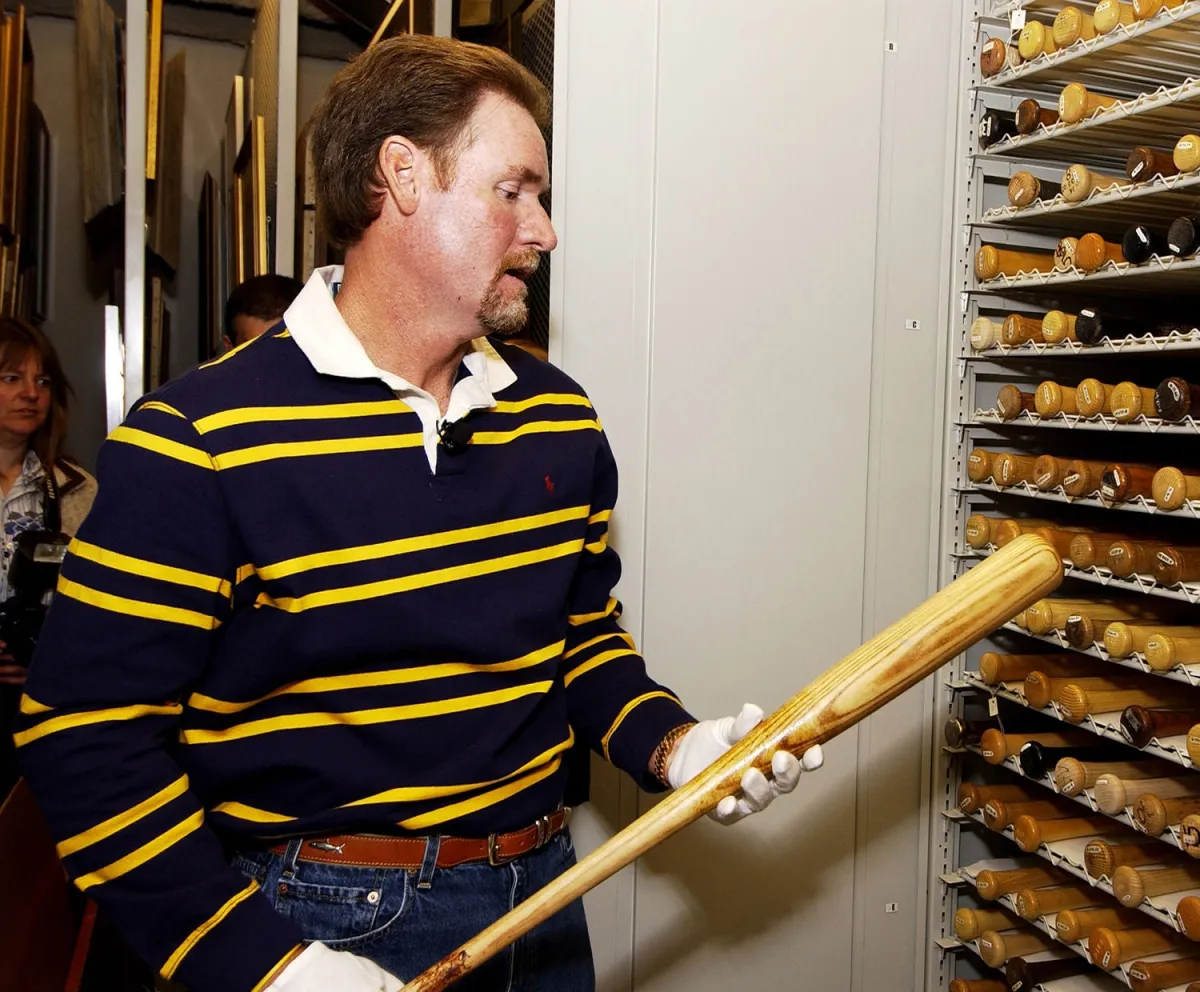 Photo: Wade Boggs, via baseballhall.org
Monday was fried chicken. Tuesday was barbecued. Wednesday was roasted. And so on, for 162 games a year, plus spring training and playoffs.
Boggs hit .328 for his career and made 12 All-Star teams. Coincidence? He didn't think so. "I'm not superstitious," he once said, "but if something works, why change it?"
The chicken obsession became so well-known that opposing fans would throw rubber chickens onto the field when he came to bat. Boggs didn't care. He kept eating chicken and kept hitting .300.
Jason Giambi: Golden Thong
When Yankees first baseman Jason Giambi was struggling at the plate in 2004, his teammates suggested he try something different. Their solution? A gold lamé thong that supposedly had magical hitting powers.
Giambi wore it under his uniform during games and immediately started hitting better. Word got out, and suddenly half the Yankees clubhouse wanted to borrow the "rally thong" when they were in slumps.
The thong became so legendary that it was eventually retired and hung in Giambi's locker. "It's about confidence," Giambi explained. "If you feel good, you play good."
The Music Masters
LeBron James: Headphone Ritual
LeBron James has one of the most elaborate pregame routines in the NBA, and it starts exactly 2.5 hours before tipoff with his headphone ritual. He puts on the same Beats headphones, plays the same playlist (which changes by season but stays consistent within each season), and goes through the same sequence of movements.
First, he sits in his locker with his eyes closed for exactly 10 minutes. Then he does his stretching routine while nodding to the beat. Finally, he takes off the headphones, throws chalk in the air, and starts his on-court warmup.
Teammates know not to interrupt LeBron during headphone time. "That's his zone," Dwyane Wade once said. "You don't mess with the zone."
Marshawn Lynch: Skittles
Seahawks running back Marshawn Lynch's love of Skittles became legendary during Seattle's Super Bowl run. But it wasn't just a marketing gimmick — Lynch genuinely ate Skittles before and during every game for energy and good luck.
The ritual started in high school when his mom gave him Skittles before a game and he had a great performance. He kept eating them through college and into the NFL, eventually consuming multiple bags during games.
Skittles became such a part of Lynch's identity that fans would throw bags of them into the crowd during his touchdown celebrations. The candy company eventually sponsored him, but Lynch was eating Skittles long before they paid him to do it.
The Uniform Obsessives
Michael Jordan: UNC Shorts
Michael Jordan wore his University of North Carolina practice shorts under his Bulls uniform for every game of his NBA career. Every single game. Six championships, five MVPs, thousands of games — and the same lucky shorts underneath it all.
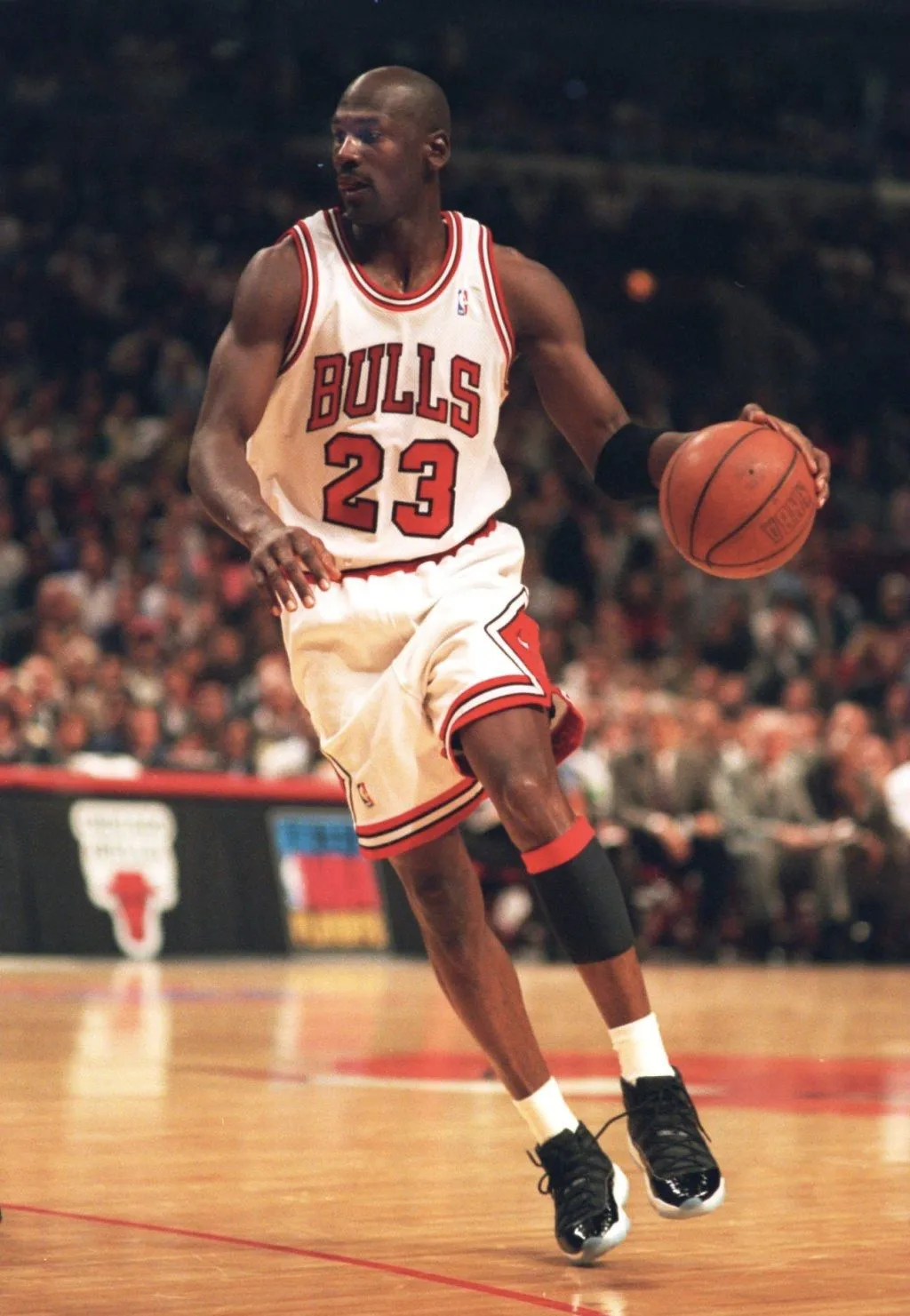 Photo: Michael Jordan, via i.pinimg.com
Jordan was so attached to the shorts that he convinced the Bulls to make their uniforms longer to completely hide the UNC blue. He said the shorts reminded him where he came from and gave him confidence on the court.
"I had them on in college when I hit the shot to win the national championship," Jordan explained. "Why would I ever take them off?"
Turk Wendell: Tooth Necklace
Mets pitcher Turk Wendell had one of the most bizarre uniform modifications in baseball history. He wore a necklace made of teeth — animal teeth that he collected from hunting trips.
Wendell would add a new tooth to the necklace after successful hunts during the offseason, and he believed the necklace gave him power on the mound. He also brushed his teeth between innings, chewed black licorice instead of tobacco, and jumped over the foul lines when running on and off the field.
Did it work? Wendell had a solid 11-year MLB career, so maybe the teeth knew something we didn't.
The Timing Perfectionists
Cynthia Cooper: Exact Timing
WNBA legend Cynthia Cooper had one of the most precise pregame routines in basketball history. She would arrive at the arena exactly 2 hours and 17 minutes before tipoff — not 2:15, not 2:20, but exactly 2:17.
From there, every part of her routine was timed to the minute. Stretching from 2:17 to 1:45. Shooting from 1:45 to 1:20. Team meeting from 1:20 to 1:00. And so on, right up until game time.
Cooper won four WNBA championships and two Finals MVPs. Her teammates learned to work around her schedule because they knew better than to mess with something that was clearly working.
Tony La Russa: Lineup Cards
Former MLB manager Tony La Russa had an obsessive relationship with his lineup cards. He would write them out in the exact same pen, using the exact same paper, sitting in the exact same chair in his office.
If he made a mistake or the pen stopped working, he would throw the card away and start completely over. He once went through seven lineup cards before getting one that felt right.
La Russa won three World Series championships, and he credited his attention to detail — including the lineup card ritual — as a major factor in his success.
The Psychology Behind the Madness
Sports psychologists have studied athletic superstitions for decades, and the science is pretty clear: they work, but not for the reasons athletes think they do.
"Superstitions and rituals provide a sense of control and predictability in an unpredictable environment," says Dr. Jim Taylor, a sports psychologist who has worked with Olympic athletes. "They reduce anxiety and increase confidence, which can absolutely improve performance."
The key is consistency. Whether you're eating chicken or wearing lucky socks, the routine itself becomes a trigger that puts your mind and body into performance mode. It's like a switch that tells your brain, "Okay, it's game time."
"The ritual doesn't have magical powers," Taylor explains. "But if an athlete believes it works, then it works. Confidence is everything in sports."
When Rituals Go Wrong
Of course, superstitions can also backfire. What happens when your lucky restaurant closes? When your lucky socks are in the wash? When your lucky song gets stuck in your head but you can't find your headphones?
Some athletes have learned to adapt. Others have complete meltdowns.
Former NBA player Gilbert Arenas once missed a game because his lucky underwear was stolen from his hotel room. Tennis player Serena Williams used to bring multiple pairs of the same lucky socks to tournaments, just in case.
The smart athletes build flexibility into their routines. The obsessive ones... well, they just hope nothing ever goes wrong.
The Bottom Line
Pregame rituals might seem silly to casual fans, but they're deadly serious to the athletes who perform them. In a world where the difference between winning and losing can be measured in milliseconds and inches, anything that provides mental edge becomes essential.
Whether it's chicken, Skittles, or lucky underwear, these rituals serve the same basic purpose: they help elite athletes feel prepared, confident, and in control.
And when you're performing under the brightest lights in sports, feeling in control might be the most important thing of all.