Rule Breakers: The Players Who Forced Sports to Rewrite the Scorebook

Every once in a while, a player comes along who doesn't just beat the competition. They beat the system. They find a gap in how the sport is designed, exploit it so completely and so publicly that the people running the league have no choice but to sit down, look at the rulebook, and start editing.
These aren't just great players. They're scoreboard architects — athletes whose brilliance exposed the limits of how we count, measure, and reward performance in American sport.
Wilt Chamberlain and the Night the NBA Broke
Let's start at the beginning of the conversation, because nothing before or since quite compares to what Wilt Chamberlain did to professional basketball in the early 1960s.
 Photo: Wilt Chamberlain, via facts.net
In the 1961-62 season, Chamberlain averaged 50.4 points per game. Not in a single game. Not in a hot streak. Per game. For an entire season. He scored 100 points in a single contest against the New York Knicks in Hershey, Pennsylvania — a game that, remarkably, wasn't even broadcast live and exists now only in grainy photographs and the memories of the few hundred fans who were actually there.
The NBA's response was swift and, honestly, a little panicked. The league widened the lane from 12 to 16 feet to push Chamberlain further from the basket. They tinkered with offensive goaltending rules. They adjusted how inbound passes worked near the basket specifically because of how Wilt's teammates lobbed the ball to him. The man was so dominant that the league essentially rewrote the architecture of the paint just to slow him down.
It didn't really work, for the record. But it changed how the sport was built, and that legacy is still visible every time you look at a modern NBA court.
Barry Bonds and the Home Run That Broke Baseball's Brain
Baseball has always been obsessed with its own numbers. The sport treats statistics like sacred scripture, and for most of the 20th century, the home run record was the holiest number of all. Roger Maris hit 61 in 1961 and the baseball world treated it like a fixed star in the sky — permanent, untouchable, meaningful.
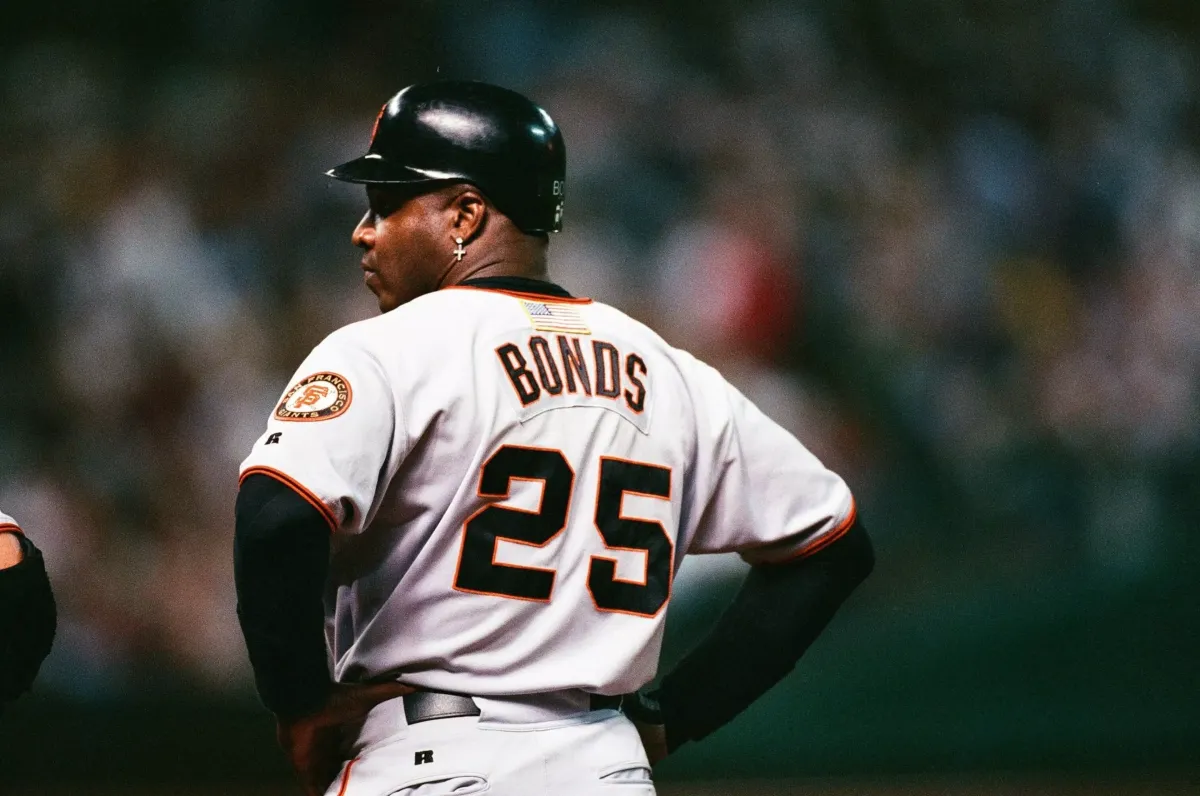 Photo: Barry Bonds, via assets.sfstandard.com
Then Barry Bonds hit 73 in 2001, and nobody quite knew how to feel about it.
The broader context of the steroid era is well-documented and complicated, but what Bonds did from a pure performance standpoint was genuinely historic. He posted an on-base percentage of .582 in 2004. Teams walked him intentionally 120 times in a single season. Opposing managers were so terrified of what he might do to the scoreboard that they essentially refused to let him play.
Baseball responded by reconfiguring how it thought about offensive value altogether. The Bonds era accelerated a shift toward analytics, toward measuring production differently, toward understanding that a walk and a home run could be worth similar amounts to a team's chances of winning. He didn't just hit home runs — he made the sport reconsider what hitting meant.
Patrick Mahomes and the Death of the Pocket
For decades, NFL quarterbacks were evaluated on a fairly simple premise: Can you stand in the pocket, read the defense, and deliver the ball accurately under pressure? The game was built around that template. Offensive lines were constructed to protect it. Defensive schemes were designed to disrupt it.
 Photo: Patrick Mahomes, via s.yimg.com
Patrick Mahomes looked at that template and shrugged.
Since arriving in Kansas City, Mahomes has produced numbers that don't just look good — they look wrong. He's thrown touchdowns on plays that had broken down completely, from angles that shouldn't produce accurate throws, while moving in directions that shouldn't lead to completions. His ability to extend plays, reset, and still deliver has forced defensive coordinators to essentially invent new coverage schemes.
More importantly, Mahomes has changed how teams draft and develop quarterbacks. The premium on mobility, on improvisation, on the ability to make something out of nothing has never been higher. Scouts now evaluate quarterbacks on their capacity to do exactly what Mahomes does — manufacture points from chaos.
The pocket isn't gone, but it's no longer the only way to run a successful NFL offense. Mahomes made sure of that.
Steph Curry and the Three-Point Revolution
The three-point line has existed in the NBA since 1979. For most of its history, it was a specialty weapon — something you used at the end of quarters, or deployed through a designated shooter running off screens. It was never supposed to be the foundation of an offense.
Steph Curry changed that so completely that the NBA had to start a conversation about moving the line back.
What Curry did wasn't just shoot threes accurately. He shot them from distances and off the dribble in ways that made the concept of a "long two" — a mid-range jumper just inside the arc — essentially obsolete. Teams that had built their offensive systems around mid-range shooting watched their strategies become inefficient almost overnight. The entire sport reoriented around the three-point line because of what one player from Davidson College showed was possible.
The numbers tell the story. In the 2014-15 season, Curry shot 44 percent from three on nearly 650 attempts. Teams started fouling him in the act of shooting threes just to prevent him from making them. He invented a new kind of foul. Think about that for a second — he played so well that defenders had to find a new way to stop him, and in doing so, created a new category of basketball play.
What It All Means
The thread connecting all of these players isn't just talent. It's the particular kind of talent that makes a system feel inadequate. Chamberlain made the lane feel too small. Bonds made the intentional walk feel like a legitimate offensive strategy. Mahomes made the pocket feel optional. Curry made the mid-range feel like wasted real estate.
In each case, the sport had to respond — either by changing rules, changing strategy, or changing how it measured value entirely.
That's the real legacy of the scoreboard architects. They don't just fill up the stat sheet. They make everyone else pick up a pencil and start sketching something new.