Nothing Happened — And That Changed Everything: The Scoreless Stretches That Quietly Decided Championships
There's a strange paradox at the heart of sports: the moments that define a championship aren't always the ones that light up the scoreboard. Sometimes the most powerful thing a game can produce is a long, grinding, scoreless stretch where nothing is added to either column — but everything underneath shifts.
Momentum. Confidence. Fear. All of it moving in silence while the clock keeps ticking.
This is a celebration of those invisible earthquakes. The stretches where neither team scored, but one team quietly broke, and the other quietly took over.
The World Series and the Art of the Scoreless Inning
Baseball is uniquely built for this kind of drama. No clock, no mercy. Just outs and innings piling up while tension accumulates like pressure in a sealed container.
Think back to the 2016 World Series between the Chicago Cubs and Cleveland Indians. Game 7 is remembered for its rain delay and its final few innings, but the real psychological turning point came earlier — in a stretch of middle innings where both offenses went completely quiet. For nearly three full innings, neither team pushed a run across. What looked like a stalemate was actually something much more significant: the Cubs, carrying 108 years of organizational heartbreak, were quietly steadying themselves. The Indians, who had the lead, were quietly beginning to press.
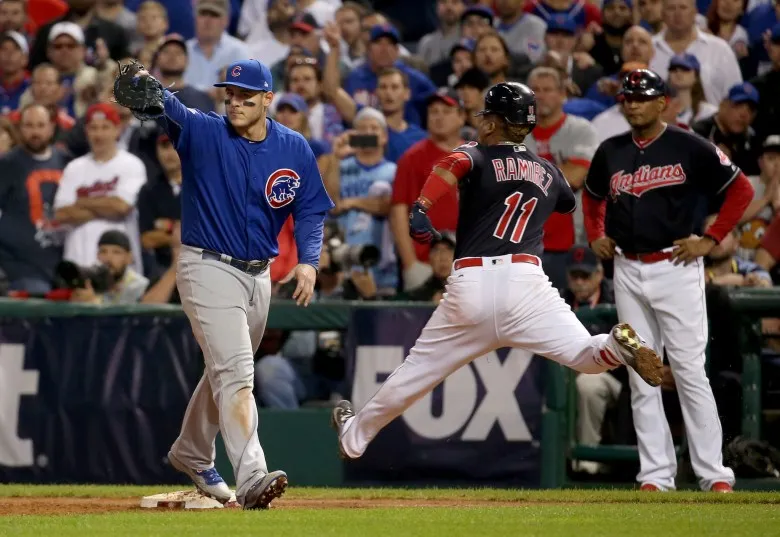 Photo: 2016 World Series, via www.chicagotribune.com
By the time the Cubs finally broke through, the game had already been decided in some intangible way. The scoreless stretch wasn't filler. It was the whole story.
Baseball purists have always understood this. Pitchers talk about it constantly — the way a clean inning after a defensive miscue can reset a dugout's entire emotional state. You don't need to score to swing a game. Sometimes you just need to survive.
The NBA Finals and the Drought That Breaks a Team
Basketball moves faster, but scoreless stretches hit differently in the NBA because the game rewards rhythm so heavily. When a team goes cold — truly cold — for five or six minutes in a Finals game, it isn't just about the points they didn't score. It's about what that cold spell does to their legs, their shot selection, their belief.
The 2013 NBA Finals, Game 6, between the Miami Heat and San Antonio Spurs is remembered for Ray Allen's corner three. But before that miracle, there was a stretch where the Heat's offense essentially evaporated. They couldn't get clean looks. The Spurs, smelling a championship, locked in defensively in a way that made Miami look disorganized and desperate.
What made Allen's shot so electric was precisely that it ended the drought. The silence had been so loud, so suffocating, that a single made basket felt like a thunderclap. The Spurs didn't just lose that possession — they lost the psychological ground they'd spent six minutes building. One shot ended a scoreless stretch, and with it, the Spurs' championship hopes for that night.
Coaches know this better than anyone. Timeouts during scoring droughts aren't just tactical — they're psychological CPR.
Football's Invisible Turning Points
In the NFL, scoreless stretches play out across entire quarters. A defensive series that produces three straight punts might look like a wash on the stat sheet, but inside the game it can represent a seismic momentum transfer.
Super Bowl XLIX between the New England Patriots and Seattle Seahawks had one of the most analyzed endings in football history. But the stretch of the third quarter where neither offense found the end zone was equally important. Both defenses were winning. Both offenses were adjusting. The scoreless period was where game plans were abandoned and new ones were born. By the time the fourth quarter opened up, the Patriots had figured something out — not because of what happened on the scoreboard, but because of what happened during all those possessions where nothing did.
 Photo: Super Bowl XLIX, via images.macrumors.com
Football's scoreless stretches are often disguised as field position battles, and casual fans skip right over them. But ask any offensive coordinator which drives kept them up at night, and they'll often point to the ones that went nowhere — because those were the ones that told them something was wrong before the scoreboard did.
Hockey's Blank Periods and the Pressure They Build
No sport weaponizes the scoreless stretch quite like hockey. A locked 0-0 second period in a playoff game is one of the most intense experiences in American sports, precisely because every shift feels like it could end the silence — or deepen it.
The pressure in those stretches is physical. You can see it in the way players skate harder, hit cleaner, take fewer risks. Teams don't just go scoreless in hockey; they sometimes choose to go scoreless, protecting a structure rather than gambling for a goal. And when one team finally cracks and gives up a power play goal after fifteen minutes of nothing, the psychological damage is enormous.
In the 2019 Stanley Cup Finals, the St. Louis Blues and Boston Bruins traded long, grinding scoreless stretches across multiple games. The Blues, who had been a last-place team in January of that same season, used those quiet periods to build something real. Their belief grew in the silence. Boston's certainty quietly eroded.
What the Blank Scoreboard Is Actually Telling You
Here's the thing about scoreless stretches that makes them so fascinating: they're not neutral. Nothing in a high-stakes game is truly neutral. Every minute that passes without a score is a minute where one team is getting more comfortable and another is getting less so.
The scoreboard is a lagging indicator. It tells you what already happened. The scoreless stretch is where you find out what's about to happen — if you know how to read it.
Next time you're watching a big game and the score hasn't moved in a while, don't reach for your phone. That's exactly when the real story is being written.