When the Whole Country Stopped Scrolling: The Sports Events That Took Over America
Photo: McKay Savage from London, UK, CC BY 2.0, via Wikimedia Commons
Most sports moments live and die within their own fan base. The touchdown gets celebrated, the box score gets filed away, and by Monday morning the world moves on. But every so often — maybe once or twice in a decade — something happens on a court, a field, or a rink that refuses to stay inside the sports bubble. It bleeds into dinner table conversations, dominates office small talk, and hijacks social media feeds belonging to people who genuinely couldn't care less about the game.
Those are the moments we're here for. What makes them happen? And which ones left the biggest mark?
The Recipe for a National Moment
Before we get into the specifics, it's worth thinking about what separates a great sports moment from an everyone sports moment. It's rarely just about the quality of play. It's a combination of factors that stack on top of each other until the whole thing becomes impossible to ignore.
First, there's stakes. Not regular-season stakes — we're talking about the kind of pressure that feels bigger than the sport itself. Championships, Olympic glory, records that have stood for decades. The higher the ceiling, the more people tune in.
Then there's storyline. The best national moments come pre-loaded with narrative: the underdog, the dynasty, the comeback, the rivalry with history behind it. Casual fans need a reason to care, and a compelling story gives them one.
Finally, there's timing — the thing nobody can manufacture. The right moment has to land when the country is ready to receive it. Sometimes that means a slow news week. Sometimes it means a cultural mood that makes sports feel like more than sports.
When all three collide? The whole country watches.
The Miracle That Made a Generation Believe
If you want the gold standard, start in Lake Placid, 1980. The US Olympic hockey team — a group of college kids, most of them unknown — faced the Soviet Union in the semifinals of the Winter Games. The Soviets were not just a great hockey team. They were a symbol of everything the Cold War had made America anxious about. They had dominated international hockey for years. They had embarrassed the NHL All-Stars just weeks before the Olympics.
 Photo: Lake Placid, via cdn.britannica.com
What happened next became the most replicated phrase in sports broadcasting history. Al Michaels asking "Do you believe in miracles?" wasn't just a call — it was a question aimed directly at a country that needed to hear it. The US won 4-3. They went on to claim gold. And for a brief moment, a hockey game carried the emotional weight of something much larger than a puck on ice.
Even people who had never watched a hockey game in their lives knew about it. It crossed every line — age, region, political leaning — and united the country around a single scoreboard.
Chicago's 108-Year Wait
Fast forward to November 2016. The Chicago Cubs hadn't won a World Series since 1908. That's not just a long drought — that's a generational curse, a punchline, a source of genuine heartbreak passed down through families like a strange inheritance.
 Photo: Chicago Cubs, via clipartcraft.com
Game 7 against the Cleveland Indians went extra innings. It rained. The Cubs rallied. And somewhere around midnight, a franchise that had become synonymous with lovable failure finally broke through.
The numbers told the story of how wide the audience had grown. Game 7 drew over 40 million viewers — the most-watched baseball game in a quarter century. Twitter practically melted. People who hadn't watched a single inning all season were suddenly glued to their phones, texting family members in Chicago, sending memes into the void.
The Cubs moment worked because it wasn't really about baseball. It was about time, and patience, and the idea that maybe waiting long enough actually pays off. That's a story anyone can get behind.
The Modern Amplifier: Social Media Changes Everything
Here's the thing about the current era — the bar for a "national moment" has both risen and fallen at the same time. Social media means that any mildly interesting play can rack up millions of views before the final whistle. But it also means that the truly massive moments hit harder than ever, because everyone is experiencing them simultaneously and reacting in real time.
When the Kansas City Chiefs and San Francisco 49ers met in Super Bowl LVIII in February 2024, it was already must-watch television. Add in the cultural phenomenon surrounding Taylor Swift's relationship with Travis Kelce, and suddenly the game attracted an audience that shattered records — over 123 million viewers, the most-watched television broadcast in US history at the time. The football was genuinely compelling. The overtime finish was legitimately dramatic. But the cultural layer on top of it pushed it into territory no game had reached before.
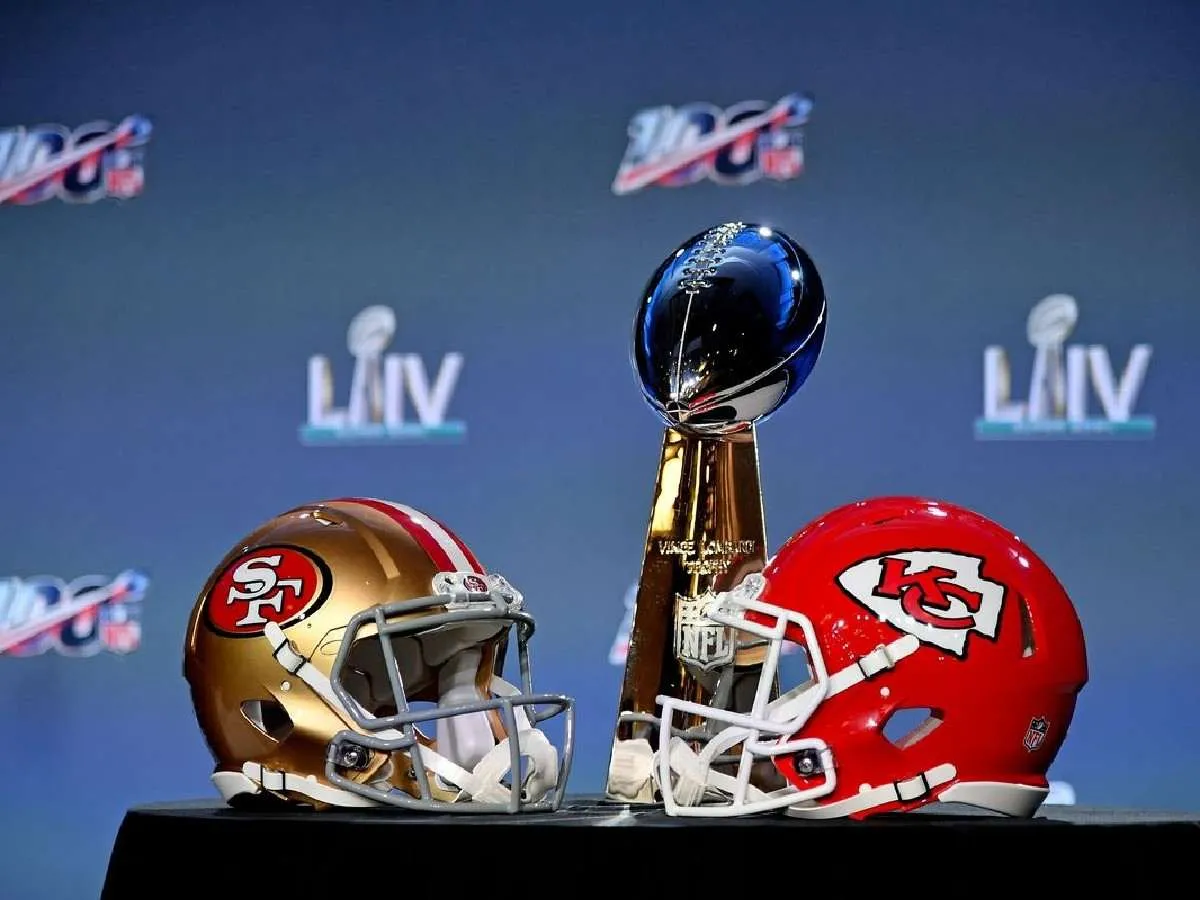 Photo: Super Bowl LVIII, via firstsportz.com
That's the modern formula: elite competition plus a story that non-fans can latch onto equals something that stops the entire country mid-scroll.
What's Next?
The honest answer is that you can't predict these moments — if you could, they wouldn't feel special. But there are some setups that carry the potential.
The 2028 Los Angeles Olympics will arrive with enormous built-in energy, particularly in basketball and track and field. If LeBron James is involved in any capacity, if a young American sprinter emerges as the face of the Games, the ingredients are there.
In baseball, a Yankees-Dodgers World Series — two of the sport's most storied franchises, representing the two biggest media markets in the country — would command the kind of attention the sport hasn't seen in decades.
And in college football, the expanded playoff format means more high-stakes games between programs with massive fan bases and national profiles. A Crimson Tide versus Buckeyes national championship, played in front of a country that's been building toward it all season, could be the kind of event that stops traffic.
The moments are coming. They always do. The trick is recognizing them when they arrive — and making sure you're not the only person in the office who missed it.