The Ultimate Glow-Up: Five Athletes Who Became Completely Different Players Without Switching Teams
Every February, NBA and NFL fans obsess over trade deadlines, waiting to see which struggling star will find new life with a fresh start. Change of scenery, new system, different role — sometimes that's all it takes to unlock a player's potential.
But what about the athletes who transform themselves without going anywhere? The ones who show up to the same building, wear the same jersey, and somehow become completely different players?
These transformations are rarer and often more impressive than any trade deadline acquisition. They require incredible self-awareness, relentless work ethic, and the mental toughness to ignore everyone who's already written you off — including your own front office.
Here are five athletes who pulled off the ultimate glow-up without changing their address.
Jimmy Butler: From Role Player to Franchise Cornerstone (Chicago Bulls, 2011-2017)
When the Bulls drafted Jimmy Butler 30th overall in 2011, they thought they were getting a defensive specialist who might contribute on a championship team led by Derrick Rose. Butler was supposed to be the guy who guarded the other team's best wing player and maybe hit an open three.
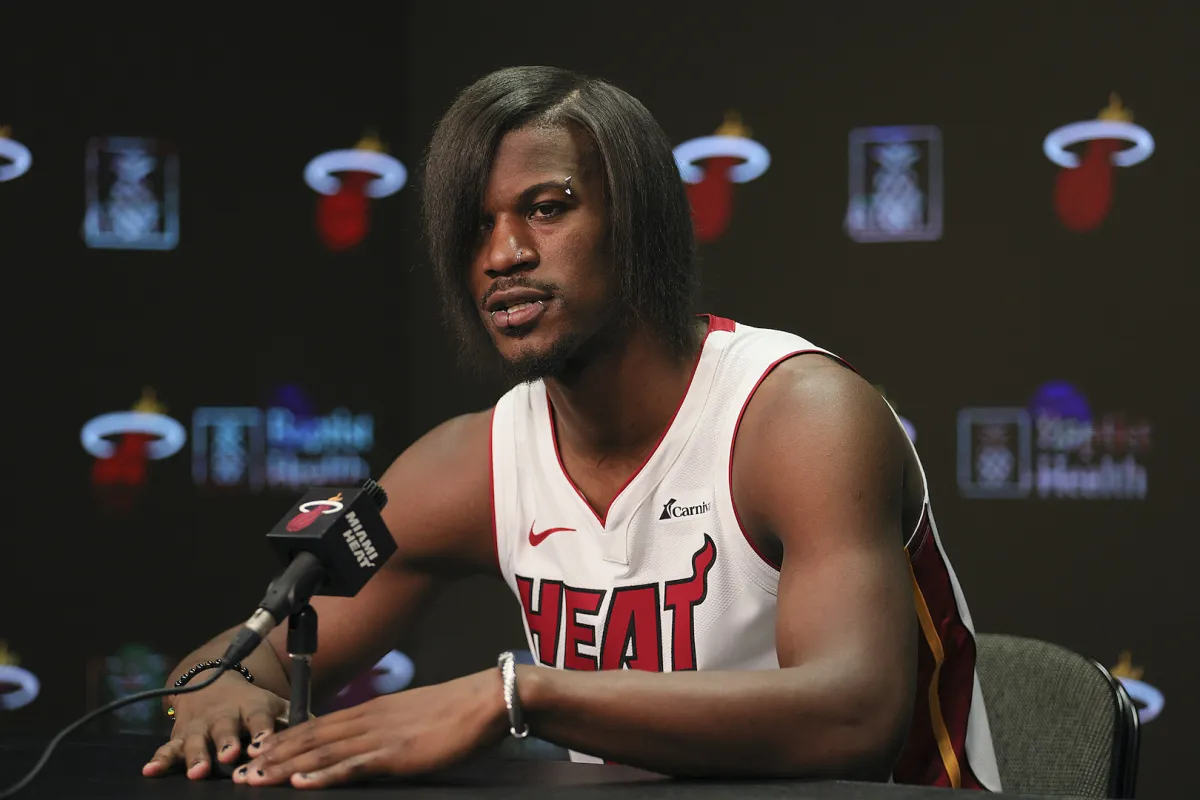 Photo: Jimmy Butler, via townsquare.media
Five years later, he was the franchise player.
Butler's transformation didn't happen overnight. He spent his first two seasons coming off the bench, averaging under 10 points per game and showing flashes of defensive ability. Then Rose got hurt, and everything changed.
Suddenly, Butler wasn't just defending elite wings — he was creating offense against them. His jump shot improved dramatically. His handle got tighter. His court vision expanded. By 2015, he was averaging 20 points, 5.8 rebounds, and 3.3 assists while making All-Star teams and finishing third in Most Improved Player voting.
The craziest part? The Bulls almost traded him multiple times during his early years. They saw him as a nice role player on a team built around Rose and Joakim Noah. Instead, he became the most valuable trade asset they'd had in years — and they eventually dealt him to Minnesota for pennies on the dollar.
Butler went from 30th pick project to franchise cornerstone without leaving Chicago. The Bulls just took way too long to realize what they had.
Alex Smith: From Bust to Franchise Quarterback (San Francisco 49ers, 2005-2012)
Alex Smith might be the ultimate example of a player completely reinventing himself with the same team. When the 49ers drafted him first overall in 2005, they expected an immediate franchise quarterback. Instead, they got six years of frustration, inconsistency, and constant speculation about his replacement.
Smith threw 19 touchdowns and 31 interceptions in his first three seasons. He had four different offensive coordinators in four years. By 2010, most 49ers fans wanted him gone, and the front office was actively looking for upgrades.
Then Jim Harbaugh arrived in 2011, and everything clicked.
Suddenly, Smith was the steady, efficient quarterback the 49ers always hoped he could be. He completed 61.3% of his passes in 2011, threw for 17 touchdowns against just five interceptions, and led San Francisco to the NFC Championship game.
The transformation wasn't just statistical — it was mental. Smith went from a tentative quarterback who seemed overwhelmed by the speed of the NFL to a confident leader who made smart decisions under pressure. He stopped trying to be Brett Favre and started being Alex Smith, which turned out to be exactly what the 49ers needed.
Of course, they eventually replaced him with Colin Kaepernick anyway. But for one magical season, Smith proved that first-round picks don't have to be busts forever.
Blake Griffin: From Dunker to Point Forward (Los Angeles Clippers, 2009-2018)
Early in his career, Blake Griffin was basketball's ultimate highlight reel. He was the guy who jumped over cars in dunk contests, threw down poster dunks in traffic, and made SportsCenter's top 10 every other night.
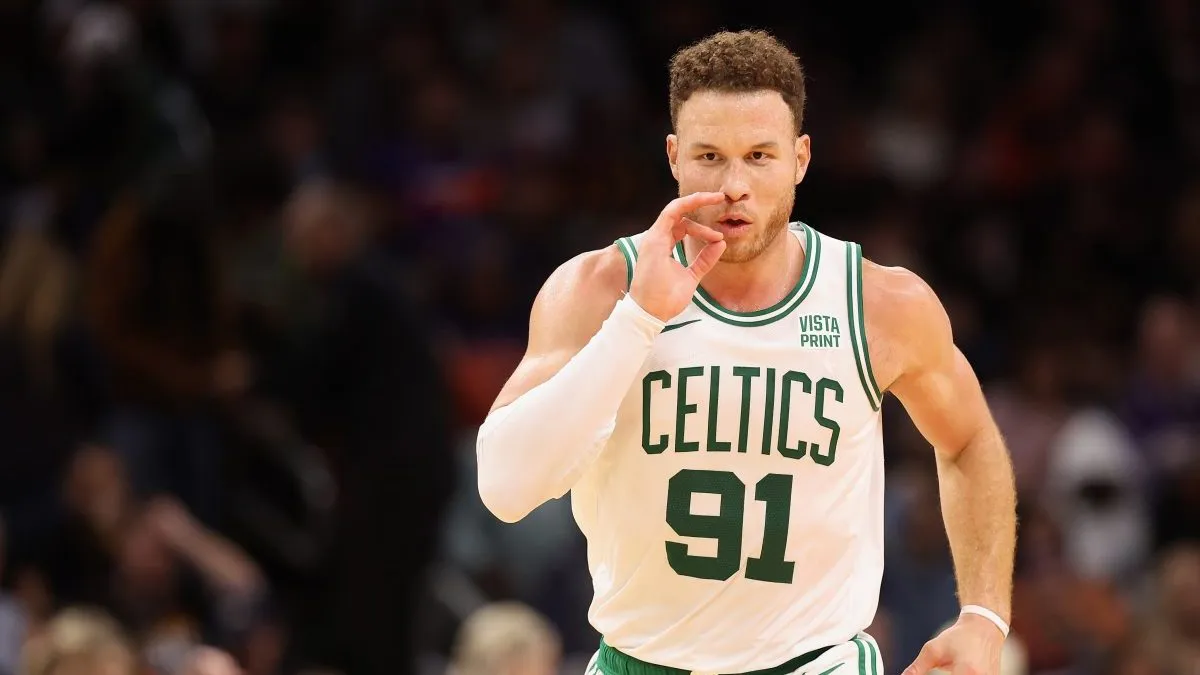 Photo: Blake Griffin, via heavy.com
He was also incredibly one-dimensional. Griffin could dunk on anyone, but he couldn't shoot beyond 15 feet, his handle was shaky, and his passing was limited. He was an elite athlete playing power forward, but not necessarily an elite basketball player.
Then he decided to become Magic Johnson.
Starting around 2013, Griffin began developing skills that nobody knew he had. His three-point shooting improved dramatically — he went from attempting 0.1 threes per game in 2012 to 4.2 per game in 2017. His court vision expanded, and he started initiating offense from the top of the key like a point guard.
By 2018, Griffin was averaging 22.6 points, 7.9 rebounds, and 5.4 assists while shooting 34.5% from three. He went from being a dunking specialist to one of the most versatile forwards in the NBA.
The Clippers eventually traded him to Detroit, but not because he couldn't play. They traded him because he had become too good — and too expensive — for a team that was rebuilding around younger players.
Jason Witten: From Blocking Tight End to Offensive Weapon (Dallas Cowboys, 2003-2017)
When the Cowboys drafted Jason Witten in the third round of 2003, they thought they were getting a reliable tight end who could block and maybe catch a few passes over the middle.
Fifteen years later, he retired as one of the greatest receiving tight ends in NFL history.
Witten's early years were solid but unremarkable. He caught 35 passes as a rookie and 87 as a sophomore — good numbers for a young tight end, but nothing that screamed "future Hall of Famer."
Then Tony Romo became the starting quarterback in 2006, and Witten transformed into an offensive centerpiece.
Suddenly, Witten wasn't just a safety valve — he was the Cowboys' most reliable receiver. He developed an uncanny ability to find soft spots in zone coverage and became Romo's favorite target in clutch situations. His route running became surgical, his hands became sure, and his football IQ became legendary.
From 2007 to 2012, Witten caught at least 94 passes every season, including a career-high 110 in 2012. He made 11 Pro Bowls and became the Cowboys' all-time leader in receptions and receiving yards.
The crazy part? He never lost his blocking ability. Witten became an elite receiver while remaining one of the best blocking tight ends in the NFL. He essentially became two different players at the same position.
Russell Westbrook: From Complementary Guard to MVP (Oklahoma City Thunder, 2008-2019)
When the Thunder drafted Russell Westbrook fourth overall in 2008, they already had their franchise player in Kevin Durant. Westbrook was supposed to be the complementary point guard — the guy who got Durant the ball and played defense.
Instead, he became one of the most explosive offensive forces in NBA history.
Westbrook's transformation accelerated after Durant left for Golden State in 2016. Suddenly, he wasn't the second option anymore — he was everything. And he responded by putting up numbers that seemed impossible.
In 2016-17, Westbrook averaged 31.6 points, 10.7 rebounds, and 10.4 assists — becoming just the second player in NBA history to average a triple-double for an entire season. He followed that up with two more triple-double seasons, rewriting the record books and winning MVP in 2017.
But the transformation wasn't just statistical. Westbrook went from being a talented but inconsistent young guard to a relentless force of nature who willed his team to victories through pure intensity and athleticism.
The Thunder eventually traded him too, but not before he gave them 11 years of incredible basketball and proved that role players can become superstars if they're willing to do the work.
The Common Thread
All five of these players share one crucial trait: they weren't satisfied with their initial role. Butler could have been content as a defensive specialist. Smith could have blamed his coaches and demanded a trade. Griffin could have kept dunking and cashing checks.
Instead, they all chose to evolve. They identified their weaknesses, put in the work, and completely transformed their games while wearing the same jersey.
That might be the hardest transformation of all — proving everyone wrong without going anywhere.