Ice Water in Their Veins: America's Five Most Reliable Clutch Performers

Ice Water in Their Veins: America's Five Most Reliable Clutch Performers
Some athletes shrink when the spotlight hits. Others seem to grow three inches taller and develop superpowers they didn't know they had. The difference between good players and legends isn't talent — it's what happens when the game's on the line and everyone's watching.
These five American sports stars have built their reputations on delivering when it matters most. They're the players coaches draw up plays for, teammates believe in, and opponents fear most when the clock's running down.
Patrick Mahomes: The Fourth Quarter Magician
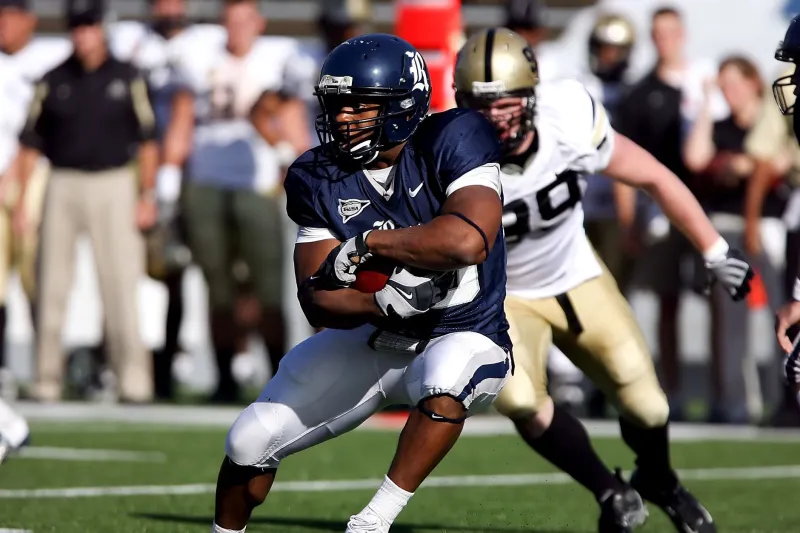
Patrick Mahomes doesn't just play football in crunch time — he plays a completely different sport that only he understands. Since entering the league, he's engineered 17 comeback victories in the fourth quarter or overtime, including three in the playoffs that directly led to Super Bowl appearances.
The numbers tell part of the story: Mahomes completes 68% of his passes in the fourth quarter of close games, compared to 64% in the first three quarters. But stats don't capture the way he seems to slow down time, finding throwing lanes that don't exist and making reads that would break lesser quarterbacks' brains.
Take the AFC Championship game against Buffalo in January 2022. Down by three with 13 seconds left and no timeouts, most quarterbacks would panic or force something stupid. Mahomes calmly hit Travis Kelce for 25 yards, then found Tyreek Hill for 19 more, setting up the game-tying field goal in regulation. In overtime, he needed just three plays to find Kelce in the end zone.
The Bills had the better defense, the better game plan, and home-field advantage. None of it mattered when Mahomes entered his final-two-minutes mode, where physics apparently become optional and defensive coordinators start praying to whatever gods might be listening.
Steph Curry: When the Building Starts Shaking
Stephen Curry shoots 43% from three-point range in clutch situations — defined as the final five minutes of games within five points — compared to his career average of 42.6%. That tiny difference doesn't seem like much until you realize he's taking impossibly difficult shots while entire arenas are screaming at him.
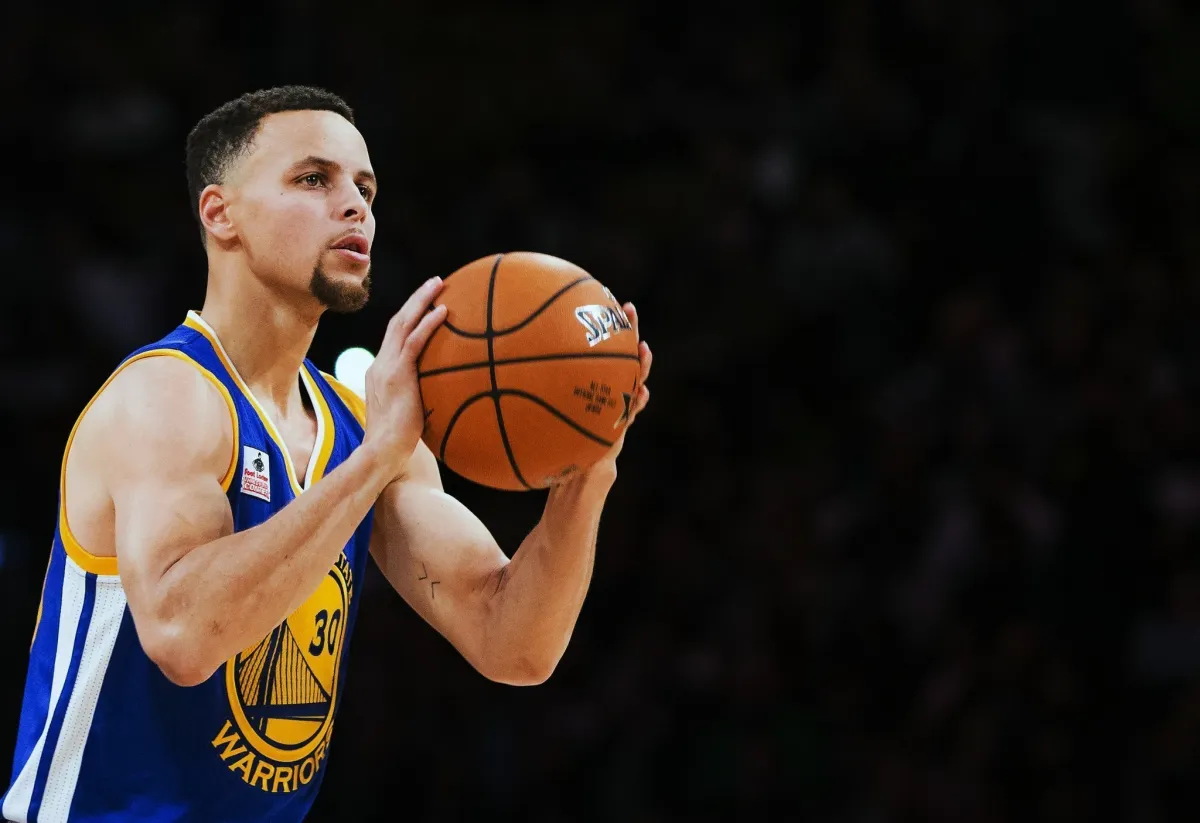 Photo: Steph Curry, via studybreaks.com
Curry's clutch gene isn't just about making shots; it's about making shots that shouldn't go in while defenders are draped all over him and 20,000 people are losing their minds. The 2022 Finals against Boston proved it again: when the Warriors needed him most in Games 4 and 6, Curry dropped 43 and 34 points respectively, hitting threes from angles that made geometry teachers question their life choices.
But the shot that defined his clutch legacy came in the 2016 regular season against Oklahoma City. Down by two with six seconds left, Curry pulled up from 37 feet — in traffic, off the dribble, with the season's best record on the line. The ball barely touched the rim, and Oracle Arena nearly collapsed from the noise.
Most players would consider that shot selection borderline insane. For Curry, it was just Tuesday night.
Kawhi Leonard: The Silent Assassin's Moment
Kawhi Leonard's Game 7 buzzer-beater against Philadelphia in the 2019 Eastern Conference semifinals might be the most tortuous game-winner in NBA history. The ball hit the rim four times before dropping through, each bounce feeling like a small eternity for everyone watching.
But that shot was pure Kawhi: methodical, calculated, and completely unbothered by the moment's magnitude. Leonard shoots 47% in elimination games throughout his career, a number that becomes even more impressive when you consider the quality of defenses he's faced and the pressure situations he's navigated.
Leonard's clutch performances don't come with the flash of Curry or the improvisation of Mahomes. Instead, they're built on surgical precision and an almost robotic ability to execute under pressure. In that same 2019 playoff run, he averaged 30.5 points in Games 6 and 7, shooting 52% from the field while carrying Toronto to their first championship.
The most telling stat about Leonard's clutch gene: he's never lost a playoff series when his team has won at least two games. When Kawhi gets his teeth into a series, he simply doesn't let go.
Aaron Judge: October's Most Reliable Giant
Aaron Judge spent years hearing about his playoff struggles, right up until he decided those criticisms were boring and went ahead and demolished them. In the 2022 postseason, Judge hit .348 with five home runs and 10 RBIs, carrying the Yankees deeper into October than they'd been in over a decade.
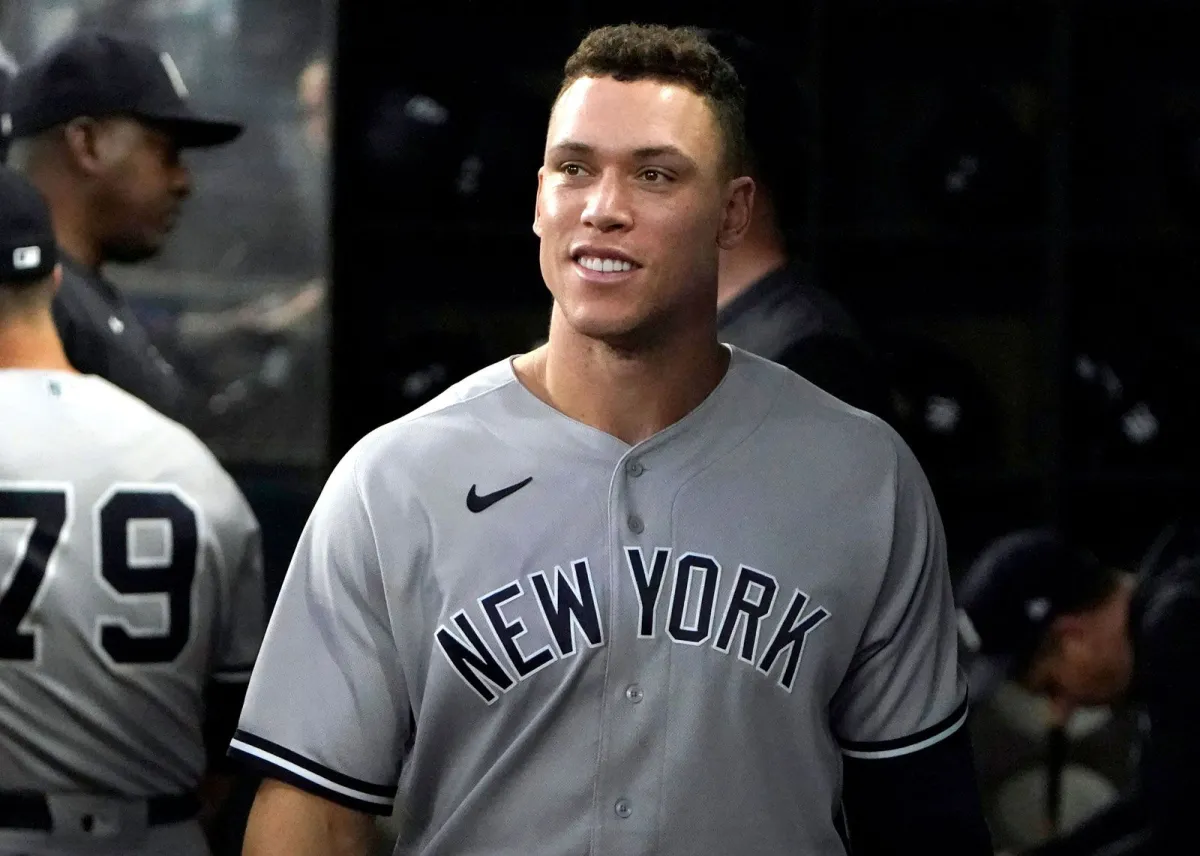 Photo: Aaron Judge, via cdn.britannica.com
Judge's clutch evolution reached its peak during his record-breaking 2022 regular season. In games decided by three runs or fewer, he hit .311 with 23 home runs — numbers that become even more impressive when you consider how many intentional walks he was seeing and how many pitchers were afraid to challenge him.
The defining moment came in Game 4 of the Division Series against Cleveland. With the Yankees facing elimination and the season slipping away, Judge launched a two-run homer in the fifth inning that sucked the life out of Progressive Field and shifted the entire series momentum.
At 6'7" and 282 pounds, Judge creates a different kind of clutch pressure than smaller players. When he steps into the box in a big moment, pitchers can't just throw strikes and hope for the best — they have to be perfect, because one mistake becomes a 450-foot souvenir.
Jayson Tatum: The Young King's Arrival
Jayson Tatum announced himself as a clutch performer in the 2022 Eastern Conference Finals against Miami, when he scored 26 points in the fourth quarter and overtime of Game 1 — the most in any fourth quarter/OT period in playoff history.
Tatum's clutch numbers have steadily improved each season: in 2023-24, he shot 39% from three in clutch situations while averaging 6.2 points per game in the final five minutes of close contests. More importantly, he's developed the kind of late-game confidence that makes teammates better and opponents nervous.
The shot that announced Tatum as a clutch star came in Game 1 of the 2023 playoffs against Atlanta. With 0.9 seconds left and Boston down by two, Tatum caught an inbound pass at the three-point line, spun away from two defenders, and buried the game-winner as the buzzer sounded.
What made that shot special wasn't just the degree of difficulty — it was Tatum's reaction afterward. No celebration, no emotion, just a quiet nod to his teammates as if hitting impossible game-winners was part of his daily routine.
The Clutch Gene Mystery
What separates these five from everyone else isn't physical ability — it's mental. They've all learned to embrace pressure instead of fighting it, to see big moments as opportunities rather than obstacles.
They prepare differently, think differently, and most importantly, they trust themselves when everyone else is panicking. That trust becomes contagious: teammates start believing, coaches start drawing up better plays, and opponents start making mistakes they wouldn't normally make.
In a sports landscape obsessed with analytics and efficiency, the clutch gene remains beautifully unquantifiable. You can't teach it, you can't draft it, and you can't fake it when the lights are brightest.
You either have ice water in your veins, or you don't. These five athletes have plenty to spare.